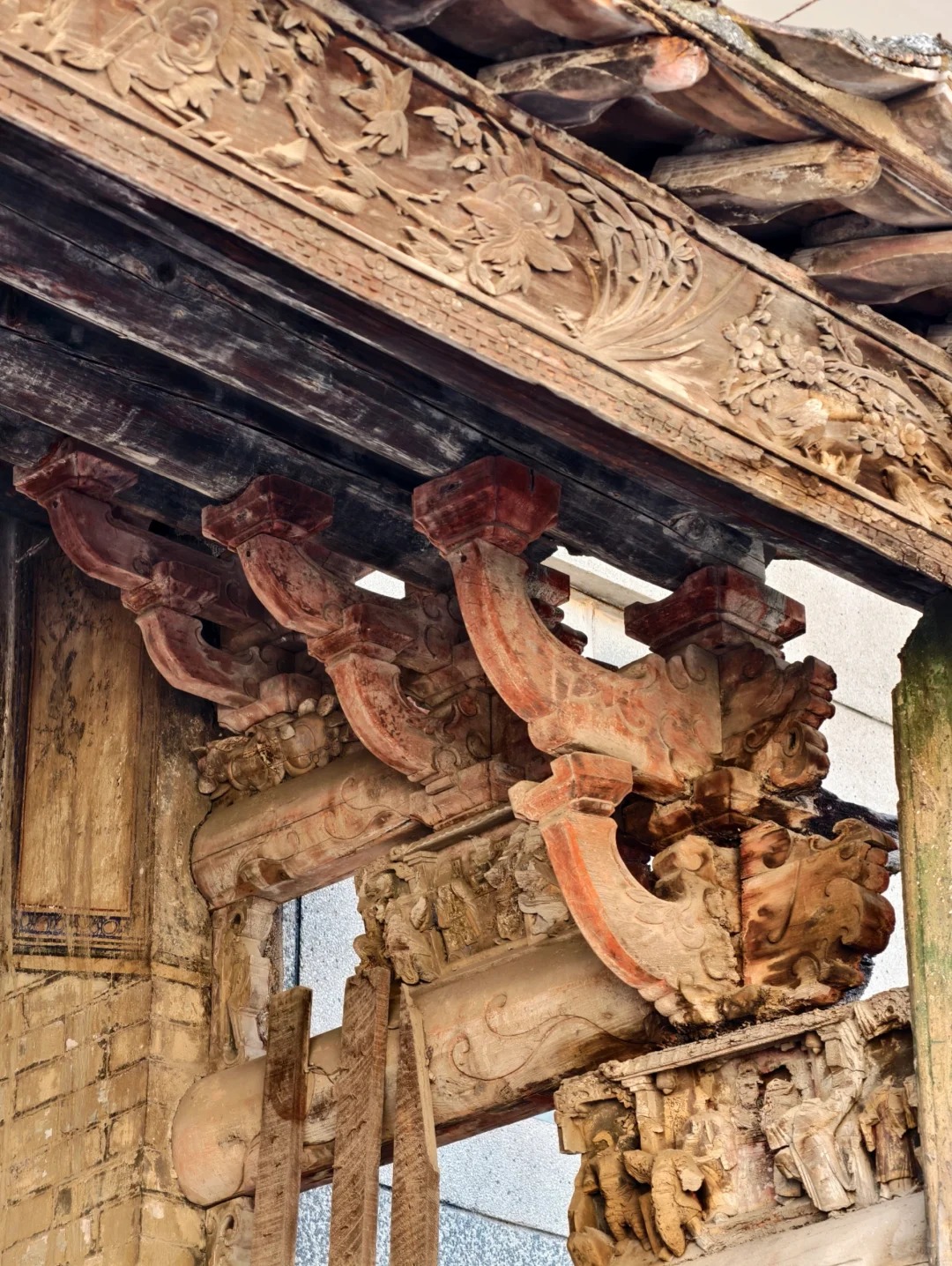
Sometimes the best discoveries happen when you least expect them. Last Saturday, I found myself wandering through a part of Shenzhen that felt like stepping into a time machine—Shajing Ancient Fair, a thousand-year-old village hiding in plain sight.
I’d heard whispers about it: “the best-preserved ancient village in Shenzhen,” “the oyster capital,” “a place where history and street art collide.” But you know how it is—sometimes these things sound better on paper. So I grabbed my water bottle, plugged “Longjin Stone Pagoda” into my map, and drove west.
Getting There (A Lesson in Patience)

Let me be honest: finding Shajing Ancient Fair is not easy. My navigation kept pointing me into what looked like an ordinary urban village—narrow streets, low buildings, the hum of daily life. I almost gave up twice. But then I saw it: a small stone pagoda, standing quietly beside a modern residential block, as if it had been waiting there for 800 years, just for me to show up.
That’s the thing about Shajing: it doesn’t announce itself. You have to look for it. And maybe that’s part of its charm.
A Walk Through Time
Shajing Ancient Fair is not a polished tourist attraction. There are no ticket booths, no souvenir shops, no crowds holding selfie sticks. It’s a living neighborhood—people live here, cook here, hang their laundry out to dry here. And woven into this everyday life are layers of history that go back to the Song and Yuan dynasties.
The layout is classic Lingnan water village: a central river, narrow alleyways branching off like fishbones, old houses with grey brick walls and sloping roofs. It’s easy to get lost, and I did, more than once. But every wrong turn led me to something interesting: a centuries-old well, a faded ancestral hall, a courtyard where someone was drying oysters in the sun.
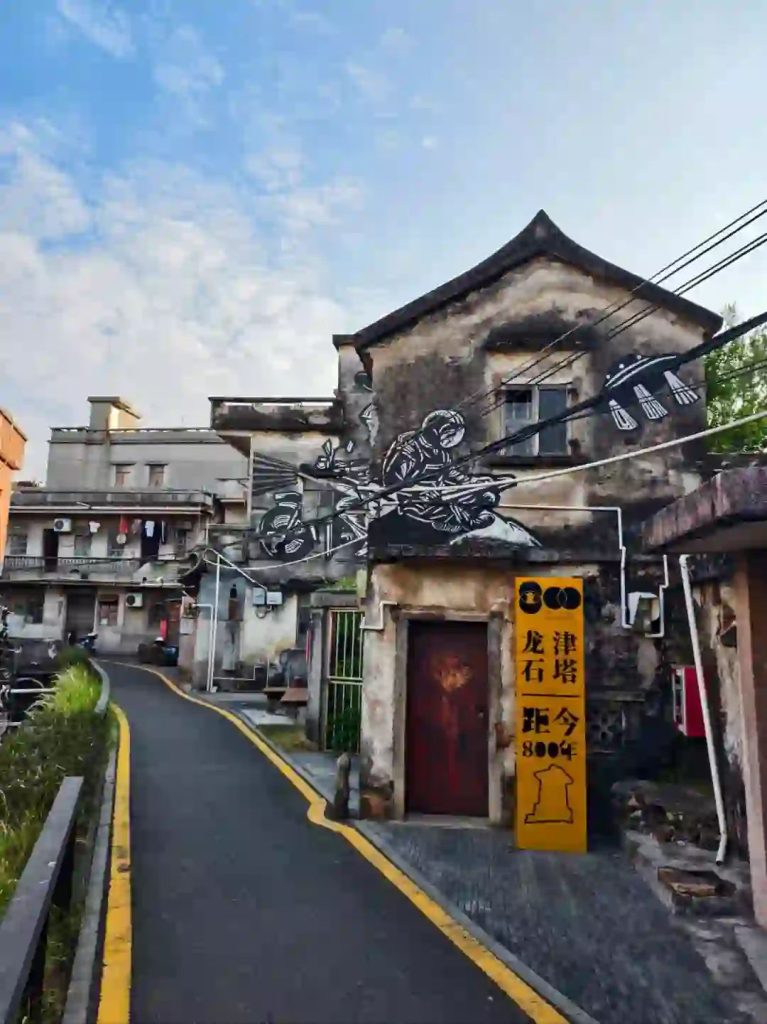
Longjin Stone Pagoda: The Oldest Standing Structure in Shenzhen
The centerpiece of Shajing is the Longjin Stone Pagoda, built in 1213 during the Southern Song dynasty. That’s right—this little pagoda has been standing here for over 800 years, making it the oldest surviving ground-level building in all of Shenzhen.
It’s not grand or towering. Just a simple stone structure, about two meters tall, carved with Buddhist figures that have softened with age. I stood there for a while, trying to imagine what this place looked like when the pagoda was new—when Shajing was a bustling salt production center, when merchants from all over Guangdong came here to trade.
Liujiao Pavilion and the Well
A short walk away is Liujiao Pavilion, a hexagonal structure marking the site of a former Song dynasty salt field. Behind it, hidden behind a modern archway, is the Weitou Well—a Ming dynasty well with a hexagonal stone rim, still intact after all these years. I peeked inside. The water looked clean, and I wondered if anyone still draws from it.
Where History Meets Street Art
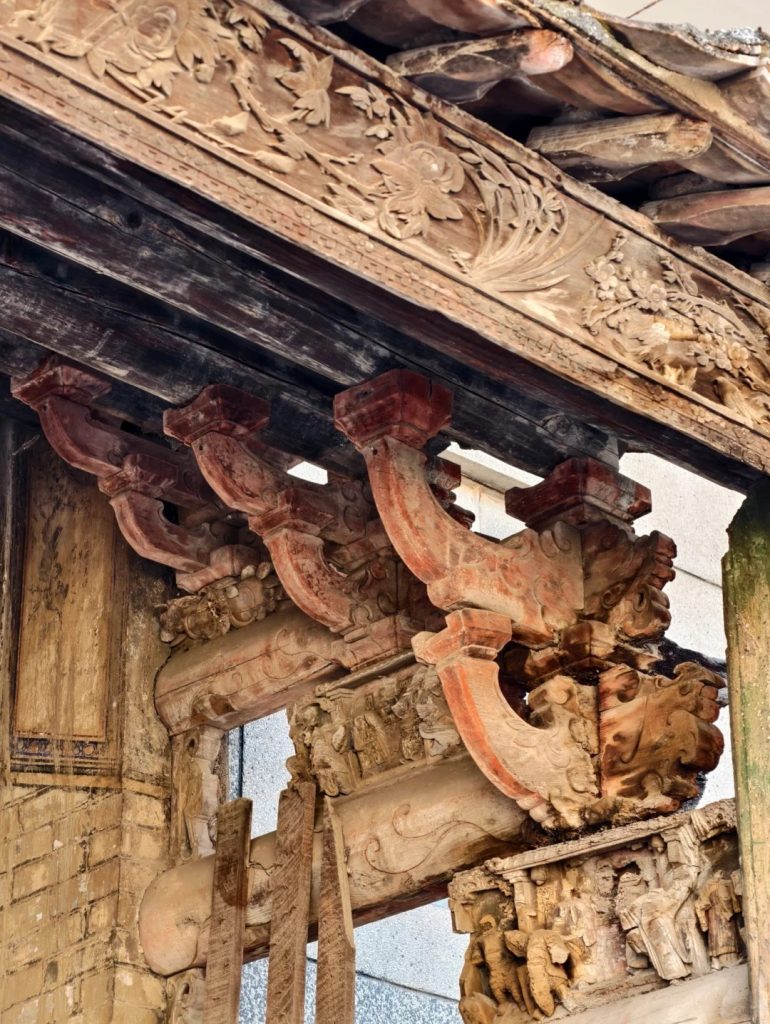
One of the most surprising things about Shajing is how it embraces the new without erasing the old. In 2019, the “Shajing Ancient Fair Renewal Project” invited artists to add contemporary touches to the ancient village. Now, scattered along the walls, you’ll find colorful murals that blend perfectly with their surroundings—oyster shells painted in bright hues, abstract faces peeking out from old bricks, a giant hand reaching for the sky.
It’s a strange and wonderful collision: 800-year-old stone pagodas next to modern graffiti, Ming dynasty wells surrounded by contemporary cafes. Somehow, it works.
The Oyster Connection
You can’t talk about Shajing without talking about oysters. This area has been famous for oyster farming for centuries—in fact, Shajing is often called the “Oyster Hometown.” As the salt industry declined, locals turned to cultivating oysters in the nearby waters, and the tradition continues to this day.
I met an elderly woman hanging strings of oyster shells outside her door. She told me her family has been farming oysters here for five generations. “The best oysters in China,” she said with a grin. I believed her.
(If you’re from Hong Kong, you might recognize Shajing oysters—many of the dried oysters you see in Hong Kong markets actually come from here. Another thread in the deep connection between our two cities.)
Practical Tips for Your Visit
| Category | Details |
|---|---|
| 📍 Navigation | Search “Longjin Stone Pagoda” (龙津石塔) on your map. It’s in Bao’an District. |
| 🚗 Parking | There’s a public parking lot near the pagoda. |
| 🚇 Metro | Line 11 to Shajing Station, Exit A, then a 1.8 km walk (or short taxi ride). |
| ⏱️ Opening Hours | Open all day. It’s a living neighborhood, so you can visit anytime. |
| 💰 Admission | Free. |
| 🥤 What to Bring | Bring your own water—there’s almost no commercial development inside the fair. |
| 👟 Footwear | Comfortable walking shoes. The alleys are old and uneven. |
| ⚠️ Note | Be respectful. People live here. Don’t touch or damage anything. |
Why This Place Matters
Shajing Ancient Fair is one of the last places in Shenzhen where you can still feel the city’s deep history—a history that goes far beyond the skyscrapers and tech parks. It’s not polished. It’s not convenient. But it’s real.
Walking through those narrow alleys, watching an old man fry oysters in a wok that’s older than my parents, seeing kids chase each other past a pagoda that has stood for eight centuries—it reminded me why I started this blog. Because Shenzhen is not just the future. It’s also the past, quietly coexisting with the present, waiting for those willing to look.
发表回复